
Last updated: April, 2026
Key Takeaways:
- RTP (Return to Player) tells you how much of your total play can theoretically come back to you over time. In sweepstakes slots, 96% is a common benchmark, though it varies by platform and game version.
- Volatility describes how frequently symbols tend to align into winning combinations. Most slots fall into low, medium, or high volatility categories — each offering a different playing experience.
- Use Gold Coins to test the waters. Try unfamiliar slots risk-free and filter out games that don't suit your style. Once you've found ones that click, you can confidently switch to playing with Sweeps Coins.
What Is RTP in Sweepstakes Casino Slots?
RTP, or Return to Player, is the theoretical percentage of a game's total play value that's expected to be returned to players over time. Crucially, it's calculated across millions of spins — not your individual session.
As a general rule of thumb in online slots:
- ~96% RTP is considered average
- 97% or higher is considered good
Here's a simple way to picture it: if a slot has 97% RTP and 100,000 Sweeps Coins are used in play, the game is expected to return around 97,000 Sweeps Coins in the long run. But that doesn't mean you personally will see 97% of your coins come back — another player could land a big win while your session comes up dry.
That's because slots don't distribute returns evenly. One player might hit a top prize early; another might go a long stretch without a meaningful return.
Every slot runs on a Random Number Generator (RNG) — a system that ensures no spin is influenced by the one before it and no pattern can be anticipated.
RTP vs House Edge: What’s the Difference?
You've probably heard the phrase "the house always wins." That's the house edge in a nutshell — the platform's built-in mathematical advantage, and simply the flip side of RTP:
House edge = 100% − RTP
In sweepstakes slots, the house edge typically lands between 1% and 7%:
- A slot with 96% RTP carries a 4% house edge
- A slot with 99% RTP carries just a 1% house edge
The house edge represents the portion the platform retains over the long run — not per spin, but across all play combined.
Does RTP Change Between Gold Coins and Sweeps Coins?
No — the math stays the same regardless of which currency you're using. Whether you play with Gold Coins or Sweeps Coins, the underlying game mechanics don't change. The difference lies in how those currencies function on the platform, not in how the slot itself behaves.
Where things get more nuanced is when you compare slots to table games:
- Slots typically range from 94% to 97% RTP, depending on the title
- Table games like blackjack can reach 98% to 99% RTP — but only when played with an optimal strategy
That said, many sweepstakes casinos don't count table games toward Sweeps Coins progress. So even if blackjack looks like the better deal on paper, it won't always move the needle for your progression. That's why slots remain the go-to across both coin modes.
How Do You Find a Slot’s RTP in Sweepstakes Casinos?
Transparency around RTP is one area where many sweepstakes casinos still fall short. Since there's no single governing authority requiring platforms to publish it, a lot of them simply don't display it upfront — leaving players to dig for it themselves.
That said, some platforms genuinely stand out. Stake.us is one of the rare exceptions that makes RTP clearly visible without requiring you to load a game first. It's built a strong reputation in this area, particularly with its Stake Originals — many of which use a provably fair model and offer around 99% RTP.
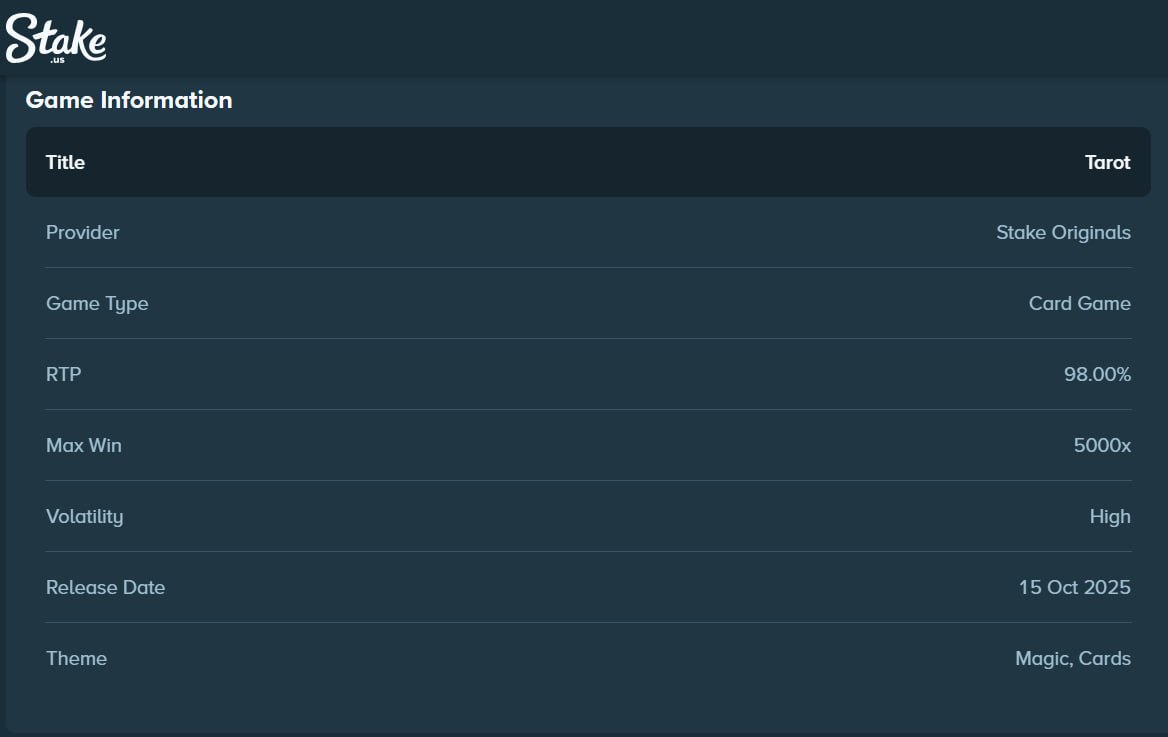
On most other platforms, finding RTP usually means:
- Launching the slot game
- Tapping the "?" or "i" button within the game interface
- Or searching for it directly using the format: Game Name + Provider + RTP
It might feel like extra effort, but checking RTP before you start playing is well worth it. It helps you identify games with better long-term return value — before you've used a single Sweeps Coin.
Why Do the Same Slots Have Different RTPs at Different Sweepstakes Casinos?
If you've ever noticed the same slot feeling different across platforms, you're not imagining it. A big part of the reason comes down to how RTP is configured behind the scenes.
Major providers like Hacksaw Gaming, NetEnt, and BGaming don't build their slots with a single fixed RTP. Instead, they typically offer multiple versions of the same game across three tiers:
- 91% RTP — lower-return version
- 94% RTP — mid-range version
- 97% RTP — higher-return version
The sweepstakes platform chooses which version to run — and that choice is rarely made visible to players.
Unlike regulated online casinos, which are often required to meet minimum RTP standards set by gaming authorities, sweepstakes sites operate under promotional sweepstakes laws. In practice, that means:
- There's no required minimum RTP
- Platforms have more flexibility to run lower-return versions
- Disclosure is optional, not mandatory
In some cases, the in-game info screen may display the provider's default highest RTP — even if the platform is actually running a lower version. Without independent audits or clear disclosure, there's no reliable way to confirm which version is really active.
That said, some platforms are moving in the right direction. Stake.us displays RTP before a game even loads, and Crown Coins has publicly shared an overall platform RTP of 97.96%. These are encouraging signs — but for now, they remain the exception rather than the rule.
It's also worth keeping in mind that, beyond some surface-level similarities in how games are presented, sweepstakes casinos differ quite a bit from traditional online casinos — and RTP transparency is just one of those differences.
How Does Slot Volatility Affect Your Sweeps Coins?
RTP doesn't tell the whole story. There's another factor — volatility, sometimes called variance — that shapes how a slot actually feels to play. In simple terms, volatility tells you two things:
- How often a slot produces returns
- How large those returns tend to be
Volatility is baked in by the game developer and can't be adjusted. Your only real decision is finding a slot whose volatility profile matches the way you like to play.
Most slots fall into one of three categories:
- Low volatility — the most consistent option. Symbols line up more frequently, though returns tend to be smaller. This makes your Sweeps Coins last longer, which is ideal for extended sessions or working through playthrough requirements.
- Medium volatility — a balanced middle ground. You get a mix of regular action and reasonable return sizes, making these a solid all-around choice for most players.
- High volatility — the least predictable of the three. Winning combinations appear less often, but when they do, the returns can be significantly larger. These games generally require a deeper Sweeps Coins balance to ride out the quieter stretches comfortably.
Two slots can share an identical RTP yet feel completely different in practice. A low-volatility slot delivers smaller, more frequent returns, while a high-volatility one holds back longer — but can come through in a bigger way when it does.
How to Check a Slot’s Volatility
Finding a slot's volatility is straightforward. Simply:
- Open the help or info section within the game
- Look for the terms volatility or variance
If it's not listed there, a quick check on the provider's official website will usually do the trick.
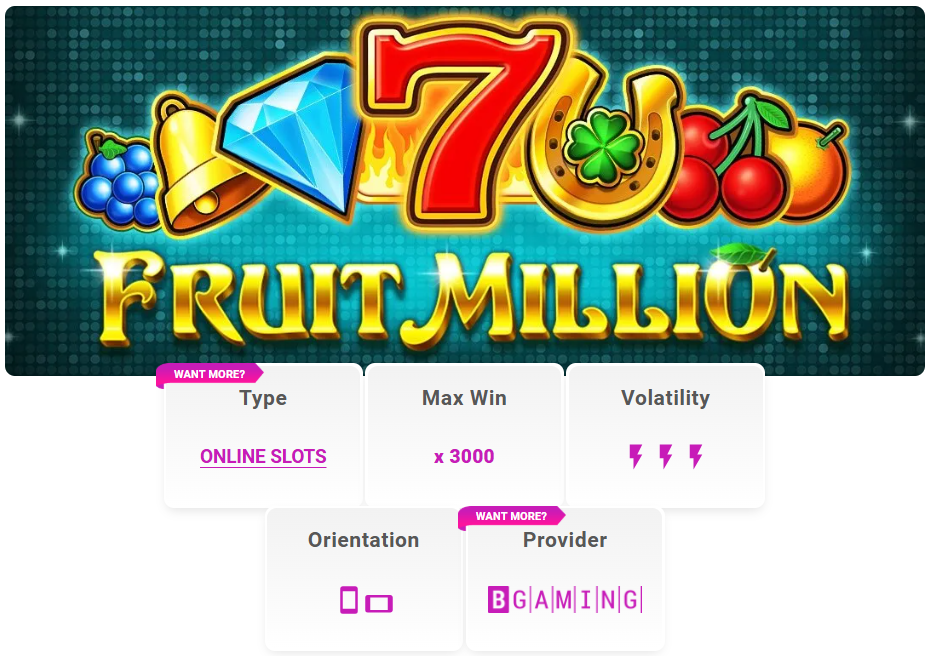
Volatility Comparison Table
Here's a closer look at how each volatility level affects your gameplay and your Sweeps Coins balance.
| Volatility Level | Win Frequency | Typical Payout Size | SC Balance Impact | Best For | Example Slots | Where to Play |
|---|---|---|---|---|---|---|
| Low | High | Small | Slow, steady decline | Long sessions, low-risk play | Starburst | Chumba Casino |
| Medium | Moderate | Medium | Balanced ups and downs | Casual play, mixed strategy | Blood Suckers | Crown Coins |
| High | Low | Large | Fast swings, higher risk | Big win potential, risk-tolerant players | Dead or Alive | Stake.us |
To summarize:
- Low volatility keeps you in the game longer and smooths out your Sweeps Coins balance
- Medium volatility offers a bit of everything, without the extreme swings
- High volatility is where you accept more risk in exchange for the chance at bigger returns
If you already have a volatility preference, it's easier to head straight to platforms that match your style. Want to go a step further? Check out our slot selection guide, where we break down some of the highest RTP slots available.
How Do You Match Slot Selection to Your Playing Goals?
If there's one thing to take away from this guide, it's this: not all slots are meant to be played the same way. The right choice depends entirely on what you're trying to get out of your session.
That's where combining RTP and volatility becomes so useful. Think of RTP as your long-term return, and volatility as how that return actually shows up while you play. Together, they give you a much clearer picture of what to expect before you spin a single reel.
| RTP | Low Volatility | Medium Volatility | High Volatility |
|---|---|---|---|
| Below 94% | Avoid - Drains your balance without much value | Avoid - Unfavorable returns with no upside | Avoid - High risk with low return |
| 94%–96% | Acceptable, but not optimal | Recommended - Balanced gameplay; Example: Rainbow Riches | Conditional - Risky unless you have a larger SC balance |
| 96%+ | Recommended - Best for steady, long sessions; Example: Blood Suckers | Recommended - Strong mix of return and action; Example: Thunderstruck II | Situational - Higher potential, but more volatile; Example: Dead or Alive |
How to read this:
- High RTP + Low volatility is your most consistent, lower-risk setup
- High RTP + High volatility can deliver bigger returns, but requires patience and a deeper SC balance
- Low RTP in any combination is generally not worth your Sweeps Coins in the long run
Three Player Profiles
Most players naturally fall into one of these three categories — a useful starting point if you're still figuring out your style. And if you're curious how we evaluate sweepstakes casinos overall, you can explore our 8-category expert rating system.
| Player Type | Main Goal | Recommended RTP | Recommended Volatility | Play Style | SC Balance Strategy |
|---|---|---|---|---|---|
| Grinder | Reach redemption threshold efficiently | 96%+ | Low to Medium | Small, consistent spins (0.01–0.05 SC) | Preserve balance, minimize swings |
| Entertainer | Maximize session time and enjoyment | 95%+ | Medium | Moderate spin sizes | Balance fun and longevity |
| Big-Win Chaser | Land large redemptions | 96%+ | High | Flexible, usually higher spin sizes | Needs larger balance (100x+ spin size) |
How to use this:
- Trying to stretch your Sweeps Coins and play efficiently? Follow the Grinder approach.
- Just want a fun, well-rounded session? The Entertainer setup is your go-to.
- Comfortable with risk and chasing bigger returns? Go with the Big-Win Chaser.
These frameworks help you make smarter long-term decisions, but outcomes will always vary from session to session.
How Should You Size Your Spins in Sweepstakes Casinos?
A practical way to approach this is to think in units — where your unit is simply your standard play size.
For low to medium volatility slots, aim for around 1% to 2% of your Sweeps Coins balance per play. So if you have 50 SC, that's roughly 0.50 to 1 SC per spin.
For high volatility slots, a different approach is needed. These games produce winning combinations less frequently, but returns can be larger when they do hit. A common guideline is to keep at least 100x your play size as your session balance — so if you're playing at 0.10 SC, you'll want at least 10 SC set aside for that session.
It's also worth paying attention to minimum play sizes. Slots that allow plays as low as 0.01 to 0.05 SC make it much easier to stretch your balance and extend your session without ramping up risk too quickly.
Just as important as sizing your plays is knowing when to stop. Before you start, set a couple of simple boundaries:
- A loss limit — decide how much of your balance you're comfortable losing (for example, 50%)
- A target — a point where you'd be happy to walk away if things are going well
Hitting either of those points is a natural signal to take a break or step away.
And if your main goal is making your Sweeps Coins last as long as possible, keep it simple:
- Stick to high RTP, low-volatility slots
- Prioritize steady, consistent gameplay over chasing bigger returns
SC Unit Sizing Guide
| SC Balance | Low Vol Spin Size | Med Vol Spin Size | High Vol Spin Size | Session Length |
|---|---|---|---|---|
| 10 SC | 0.10 SC | 0.10–0.20 SC | 0.05–0.10 SC | Short, higher risk |
| 25 SC | 0.25 SC | 0.25–0.50 SC | 0.10–0.25 SC | Moderate |
| 50 SC | 0.50 SC | 0.50–1 SC | 0.20–0.50 SC | Balanced |
| 100 SC | 1 SC | 1–2 SC | 0.50–1 SC | Longer, more stable |
A quick 10-second check before you start can go a long way. If you're looking to stretch your Sweeps Coins, stick with high RTP and lower volatility. If you're after more excitement, medium or high volatility can deliver that — just be ready for the swings that come with it.
How Can You Test Slots Without Risking Sweeps Coins?
Before diving into strategy, it's worth doing a quick recap of how sweepstakes casinos are structured. They operate under sweepstakes promotional laws and run on a dual-currency system:
- Gold Coins (GC) — used for free play and entertainment
- Sweeps Coins (SC) — earned through various free methods, including AMOE
You can collect GC through sign-up bonuses, daily logins, social media promotions, referrals, and tournaments. Most platforms also give you the option to purchase GC, but with so many free ways to earn them, it's rarely necessary.
What many players don't fully take advantage of is using GC as a testing tool — before touching their SC at all. This works particularly well because GC and SC play under identical conditions: the same RTP, the same volatility, and the same bonus triggers. The only real difference is that GC can't be redeemed for prizes, while SC can.
Gold Coin Testing Approach
Before trying a new slot with SC, spend some time with it in GC mode first. You don't need a large sample size — a simple routine is enough:
- Run 50 to 100 spins in GC mode
- Use the same play size you'd use with SC
- Pay attention to how the game behaves and whether it suits your style
From there, you can start filtering your options:
- Test unfamiliar slots before committing SC
- Set aside games that feel too volatile or too slow for your taste
- Keep coming back to the ones that match your preferred pace
Over time, this builds a personal shortlist of slots that actually work for you — saving your SC for games you already know and trust.
Even a short 50–100 spin run can give you a genuine feel for a game and help you avoid burning through Sweeps Coins on something that isn't the right fit.
What Are the Most Common Slot Selection Mistakes?
Let's be straightforward: luck will always be a factor. But there are some avoidable mistakes that can quietly drain your Sweeps Coins faster than they should. Fixing these won't guarantee results, but it will make your sessions smoother and more efficient.
- Picking slots based on theme alone A compelling design or fun theme can easily draw you in — but aesthetics say nothing about how a slot actually performs. Always check RTP and volatility first, because a visually impressive slot can still deliver poor long-term returns.
- Playing high-volatility slots with a low SC balance High-volatility games can go long stretches without producing a winning combination, and that's completely normal for how they're built. The problem is when your SC balance is too small to ride out those quiet periods — you may run out before a return ever comes.
- Assuming the in-game RTP is always accurate, the RTP displayed in a game's info screen isn't always the version you're actually playing. Some platforms show the provider's highest RTP by default, even when a lower version is running in the background. It's a subtle but important distinction.
- Skipping GC testing before using SC Jumping straight into a new slot with SC means you're going in blind. A short GC test run gives you a real sense of how the game behaves — and whether it's actually a good fit for your style — before anything meaningful is on the line.
Slots are entertainment first. Setting simple limits and making use of responsible gaming tools helps you stay in control and keep the experience enjoyable.
How to Choose Sweepstakes Slots: FAQs
What RTP should I look for in sweepstakes casino slots?
Aim for 96% or higher. That's roughly the standard benchmark, so anything above it offers slightly better long-term value — and some games reach as high as 97–99%. Just keep in mind that many sweepstakes casinos don't display RTP upfront, so you'll often need to load the game and check the info section, or look it up directly on the provider's site.
What is the difference between RTP and volatility?
RTP reflects how much a game returns over the long run, while volatility describes how those returns actually show up during play. Low volatility means more frequent, smaller returns; high volatility means less frequent, but potentially larger ones. The two work independently — a game can have a high RTP and still feel quite unpredictable depending on its volatility.
Are high-volatility or low-volatility slots better for sweepstakes casinos?
It depends on your goals. Low-volatility slots are better suited for steady, extended play — particularly useful when working through playthrough requirements, since they help your SC balance last longer. High-volatility slots make more sense if you have a larger SC balance and are comfortable with more variation in exchange for the chance at bigger returns.
Do Gold Coins and Sweeps Coins have the same RTP?
Yes — the underlying game mechanics are identical regardless of which currency you're using. RTP, volatility, and bonus triggers all behave the same way. The only difference is in how each currency functions on the platform: GC is for free play and can't be redeemed, while SC can.
Can sweepstakes casinos change a slot's RTP?
Not exactly — casinos don't write their own RTP settings. Game providers build slots with a few preset options, such as 91%, 94%, or 97%, and platforms choose which version to run. That's why the same slot can feel different across sites — one platform might run the higher-return version while another opts for a lower one.
How much of my Sweeps Coins balance should I use per play?
A practical starting point is 1% to 2% of your SC balance per play on low to medium volatility slots. For high-volatility games, aim to keep at least 100x your play size as your session balance — that buffer helps you ride out the natural variation without depleting your coins too quickly.
Final Thoughts on Choosing Sweepstakes Slots
When you step back and look at everything covered in this guide, it really comes down to three things: RTP, volatility, and Play sizing.
- RTP helps you understand the long-term value of a slot
- Volatility shapes how that value plays out during your session
- Play sizing determines how long your Sweeps Coins actually last
Put all three together, and you're no longer going in blind — you're making informed decisions based on how you actually want to play.
That said, no strategy eliminates uncertainty. Slots are inherently random, and luck will always be part of the picture. But what you can control is how efficiently you use your Sweeps Coins and how much you enjoy the experience along the way. Choosing the right slots, managing your balance thoughtfully, and using Gold Coins to test things out first — these small habits can make a genuine difference over time.
18+ Only. Void where prohibited. Sweepstakes casinos operate under promotional sweepstakes models and are intended for entertainment purposes only. No purchase is required to participate or claim prizes. Sweepedia.com is an independent review platform and holds no ownership interest in any sweepstakes casino operator. Please play responsibly. For more on healthy play habits, visit our responsible gameplay guide.
Comments
Log in to leave a comment
No comments yet. Be the first to share your thoughts!